Takeaways
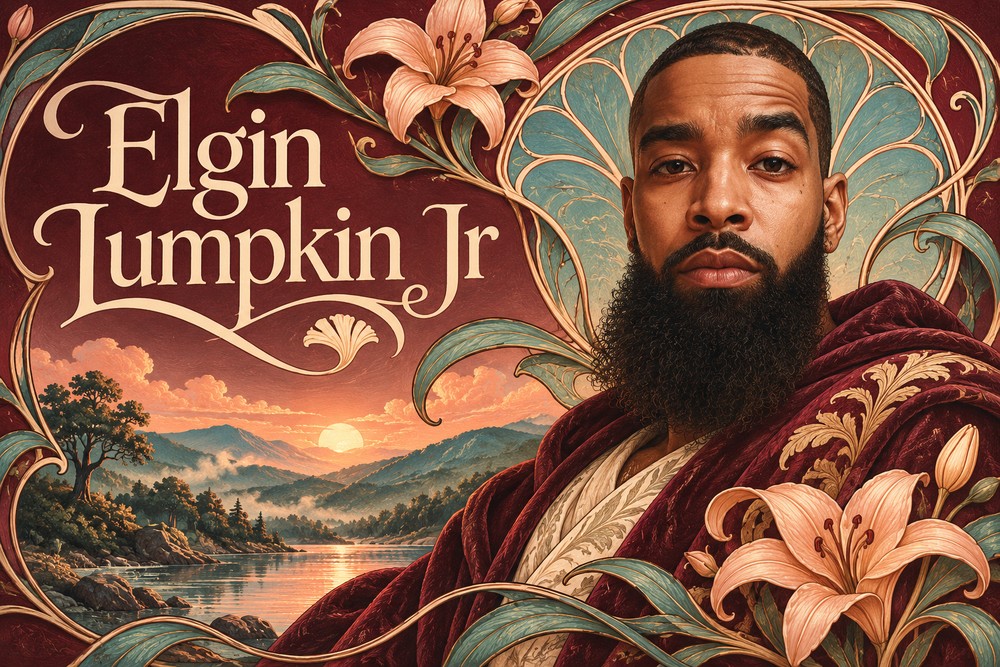
The available account of Elgin Lumpkin Jr. is primarily a family-oriented profile, and its limited public details call for a careful approach. The source profile of Elgin Lumpkin Jr. presents a person whose identity is connected to family ties rather than a widely documented public career. A responsible portrait can explain that boundary directly. It can discuss how family histories are assembled and why names and relationships matter, without turning sparse records into an invented narrative about someone’s private life.
What a public record can tell us
Biographies often rely on several kinds of evidence: official documents, published interviews, archival material, institutional records and accounts from people who knew the subject. Each source has limits. A public record may establish a date or role but say little about a person’s character. A family recollection can supply warmth and context, yet memories may differ. Good writing names the source of a claim and distinguishes confirmed facts from interpretation.
For a person who is not a public figure, the record may be intentionally small. That does not mean a life lacks significance. It means the person has not chosen, or has not needed, to make many details broadly available. A biography should not treat privacy as a puzzle to solve. It can state what is publicly documented and then focus on the wider context that helps readers understand why the available facts matter.
Names themselves can be important threads. A suffix such as “Jr.” usually signals a naming relationship across generations, but it does not establish more than that without reliable evidence. Genealogical research can help clarify family lines through census records, vital records, newspapers and family documents. Researchers must account for spelling variations and people who share the same name. Treating a name match as proof can lead to mistaken identities that are difficult to correct later.
Family history and memory
Family history is built from more than a list of ancestors. It includes migration, occupations, communities, traditions and the ways later generations remember earlier ones. Public archives preserve some of these details, while others survive only in photographs, letters and oral stories. The Smithsonian National Museum of African American History and Culture’s family-history guide offer guidance on researching family history and interpreting records. Those methods can be useful broadly, even when a particular family story remains private.
Archival research is a process of testing connections, not collecting names until a story seems complete. A researcher might compare dates and locations across records, look for corroboration and note uncertainty where sources disagree. This discipline matters because family narratives can be emotionally important. A mistaken claim about parentage, residence or occupation can affect living relatives as well as historical understanding.
Stories passed down through a family also deserve respect as testimony. They may reveal how people understood their own choices and how families made meaning from difficult events. Oral histories are strongest when recorded with consent, attributed accurately and presented in the narrator’s voice. They should not be embellished to make the story more dramatic. The pauses and uncertainties are part of the record too.
Being connected to a public story
Sometimes a private person appears in a profile because they are related to someone more visible. That association can generate curiosity, but it does not automatically make their own life public. Writers should ask whether a detail serves the reader’s understanding and whether it is already publicly available for a legitimate reason. Information about minors, health, home addresses or personal relationships deserves particular caution and generally has no place in a story unless there is clear public interest and reliable sourcing.
A public biography can acknowledge family relationships without expanding them into speculation. It can say that an individual is described in a source as part of a particular family, then make clear what is unknown. That approach is more useful than repeating online guesses about occupation, finances or personal circumstances. Search results can surface content generated without verification, and repetition does not turn a claim into evidence.
For readers, the same caution is helpful. When encountering a profile of someone with a limited public footprint, look for citations, direct statements and primary records. Notice whether the piece distinguishes fact from inference. If it does not, treat confident claims with care. Responsible reading helps prevent private people from becoming the subjects of an internet echo chamber.
The value of restraint
There is a tendency to equate detail with completeness. In reality, a short, accurate account can be more complete in an ethical sense than a long story filled with unsupported color. Restraint leaves room for the subject’s own voice and for facts that may emerge later through appropriate channels. It also recognizes that not every life needs to be made legible to strangers to be meaningful.
The Elgin Lumpkin Jr. profile is best read as a starting point for family context, not as a definitive record of every aspect of a person’s life. The public information available here does not support sweeping conclusions about personality or career. What it does support is a broader reflection: identity is shaped by relationships and history, but the telling of that history requires evidence and care.
In that sense, the strongest tribute a writer can make is accuracy. Use sources responsibly, note what remains uncertain and avoid drawing private details into public view without good reason. A careful profile protects the individual while still giving readers a meaningful way to think about family, memory and the boundaries of biography.