A figure who prefers the edges
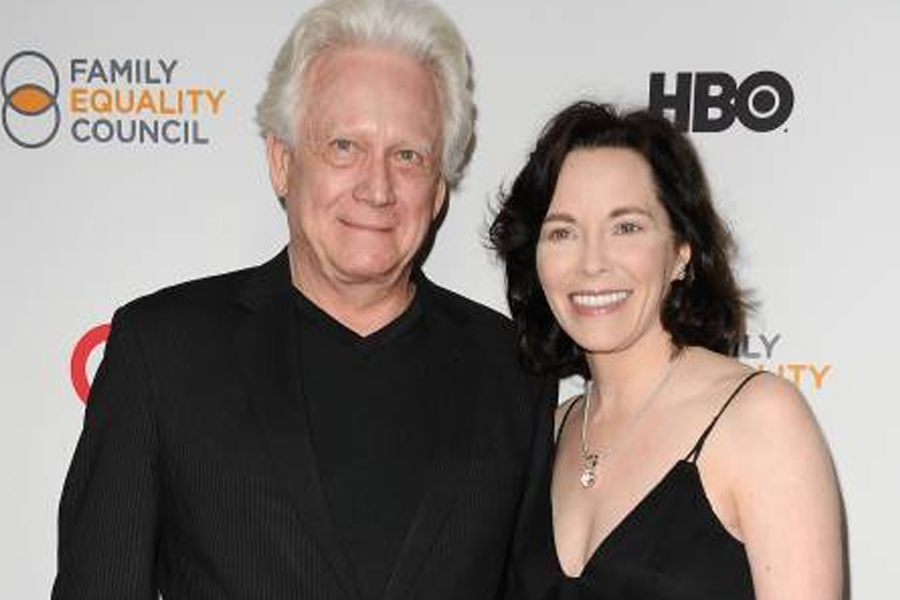
Michele Correy occupies a rare place in the public imagination: visible enough to be recognized, but guarded enough to remain partly mysterious. That combination gives her profile a soft outline, like a house seen through morning fog. She is known primarily through her connection to actor Bruce Davison, yet that description is too narrow to hold the full shape of her public presence. Correy stands as an example of how a life can intersect with Hollywood without being swallowed by it.
In a culture that often rewards exposure, she has moved in the opposite direction. Her public appearances are limited, her personal statements are scarce, and her name surfaces mostly in the context of family milestones or event photographs. This quiet approach does not read as absence. It reads as intention. Michele Correy appears to have built a life that values continuity over spectacle, and steadiness over noise.
Marriage, family, and the center of gravity
A family story often begins in the public record with dates and names, but the human reality usually lives in the intervals between them. Michele Correy married Bruce Davison in 2006, and the arrival of their daughter soon after added a new rhythm to the household. Those years marked a change in scale. The demands of daily life likely became more important than anything that happened on a red carpet.
Family life in a high visibility world can behave like a shelter made of thin glass. It is protective, but it also invites scrutiny. Correy seems to have handled that pressure by keeping the family sphere close and intact. That choice matters. It suggests a life organized around care, routine, and the ordinary tasks that rarely make headlines but shape a home more than any gala ever could.
There is also a broader family structure to consider. Being a spouse and parent in a blended entertainment family carries its own texture. It requires diplomacy, timing, patience, and a comfort with roles that shift from public to private in an instant. Michele Correy appears to have navigated those transitions with a quiet hand, like someone steering a boat through water that looks calm but still has a current beneath it.
Life beside an actor with a long shadow
Bruce Davison’s career stretches across decades of film, television, and theater, which means Correy’s life has likely unfolded alongside the momentum of a long professional arc. That kind of partnership can be challenging. Schedules move. Public attention swells and recedes. Events arrive in bursts. Then comes the long stretch of normal days, which are often the real test of any relationship.
What stands out about Michele Correy is not proximity to fame alone, but how little she seems to have tried to convert that proximity into a personal brand. She has not built a performance around being seen. Instead, she has remained a companion at select moments, a familiar presence without the machinery of self-promotion. In a marketplace where attention is often treated like currency, that restraint has a kind of elegance.
Her role is easier to misunderstand because it does not arrive wrapped in announcements. Yet public life is not only for the loud. Some people shape a shared world by keeping it stable. They are the ballast. They make it possible for the rest of the ship to move without tipping. Michele Correy’s story fits that older, quieter pattern.
Privacy as a form of identity
Privacy is often mistaken for emptiness, but in many lives it is a creative force. It defines boundaries. It protects relationships. It allows a person to remain larger than the public’s appetite for detail. For Michele Correy, privacy seems less like a shield and more like a chosen language. It is how her story is told, and also how much of it stays untold.
This matters because public fascination often works by flattening people into simple labels. Spouse. Mother. Supporting figure. Minor credit. Those labels may be factually accurate, but they are not sufficient. They leave out temperament, habits, humor, domestic rituals, and the countless micro decisions that shape a life. Correy’s profile suggests someone who understands that identity does not need a stage to be real.
There is a kind of power in refusing to overexplain yourself. A person can choose not to become a character. That refusal can be especially meaningful when the surrounding culture prefers confession, constant posting, and the open window of social media. Michele Correy seems to have opted for a more durable kind of presence, one built from consistency rather than exposure.
The texture of a low profile life in Los Angeles
Woodland Hills offers a useful backdrop for understanding the atmosphere around Michele Correy. It is part of Los Angeles, but not the most frantic part. The neighborhood carries the feel of a place where daily life still matters, where errands, school schedules, and quiet dinners can outweigh the glamour of the nearby entertainment industry. That setting suits a family that appears to have prioritized balance.
Los Angeles often gets described as a city of performance, but that description leaves out the many people who live there without performing for the camera. They shop, commute, parent, and celebrate birthdays like everyone else. Correy’s public profile suggests she belongs to that quieter city within the city. The one with more sidewalks than spotlights.
There is poetry in that contrast. The entertainment world can resemble a bright river, loud and fast, always moving toward the next thing. Yet not everyone wants to be carried by the current. Some build a porch on the bank and watch the water pass. Michele Correy seems to have chosen that porch. She inhabits the margin, but not as an afterthought. The margin is where her life has room to breathe.
What limited visibility can reveal
When someone keeps a low public profile, the available details become more meaningful because they are fewer. An appearance at an event, a family photo, a brief biographical note, these small pieces take on the weight of a mosaic tile. On their own they are modest. Together they suggest a deliberate way of living.
Michele Correy’s public image is shaped by absence as much as presence. She is not everywhere, and that fact creates a distinct impression. It tells us that a person can be connected to a famous orbit without being pulled into its center. It also reminds us that dignity often lives in restraint. Not every life needs to be narrated loudly to matter.
There is a subtle confidence in that kind of existence. It does not ask for applause. It does not chase the camera. It moves with the confidence of a well kept garden, where the work is visible only in the health of what grows. In that sense, Michele Correy’s life reads like a carefully tended interior space, warm with family and protected from the weather of public opinion.
A name that keeps its shape
Michele Correy remains interesting precisely because she has not turned herself into a spectacle. Her name appears in the public record, but her life does not spill beyond its borders. That restraint gives her story a clean line and a human scale. She is part of an entertainment-adjacent world, yet she has not been absorbed by its hunger for constant revelation.
There is something enduring in that. A life can be meaningful without being broadcast. A family can matter without being documented at every turn. A person can stand beside a public figure and still remain distinct, whole, and private. Michele Correy seems to live inside that truth, carrying herself with the calm force of someone who understands that not all value has to be announced to be real.
What To Know Before You Bring Home A Beach House
Keeping Your Yard Safe When Trees Start Acting Suspicious
Why Motorcycle Rides Can Become Dangerous In An Instant
The Smile Makeover Blueprint For Modern Dental Veneers
Park City Comes Alive Through Art Music And Mountain Culture